












2026-09-23


A lot of people use a voltmeter to figure out how much charge is left in a LiFePO₄ battery. But you need to understand three completely different types of battery voltage. Get them mixed up, and you will get totally wrong results.
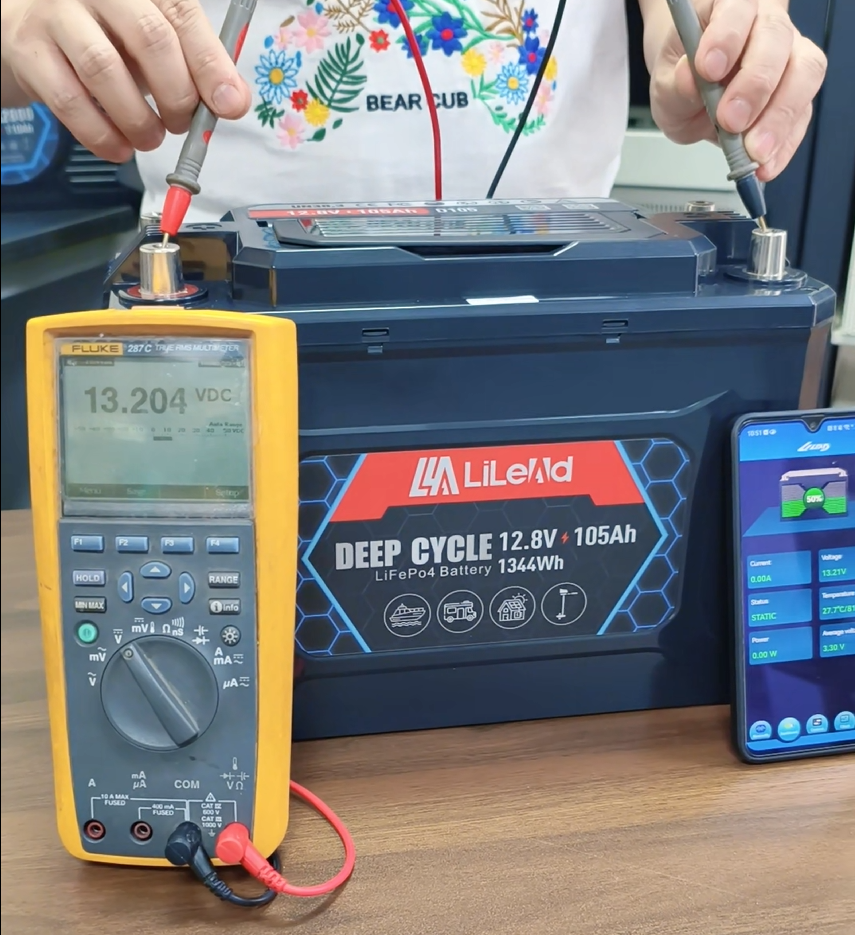
First: Open circuit Voltage
This is the voltage measured when the battery is neither charging nor powering any load. It is taken after the battery has rested for a long enough time.
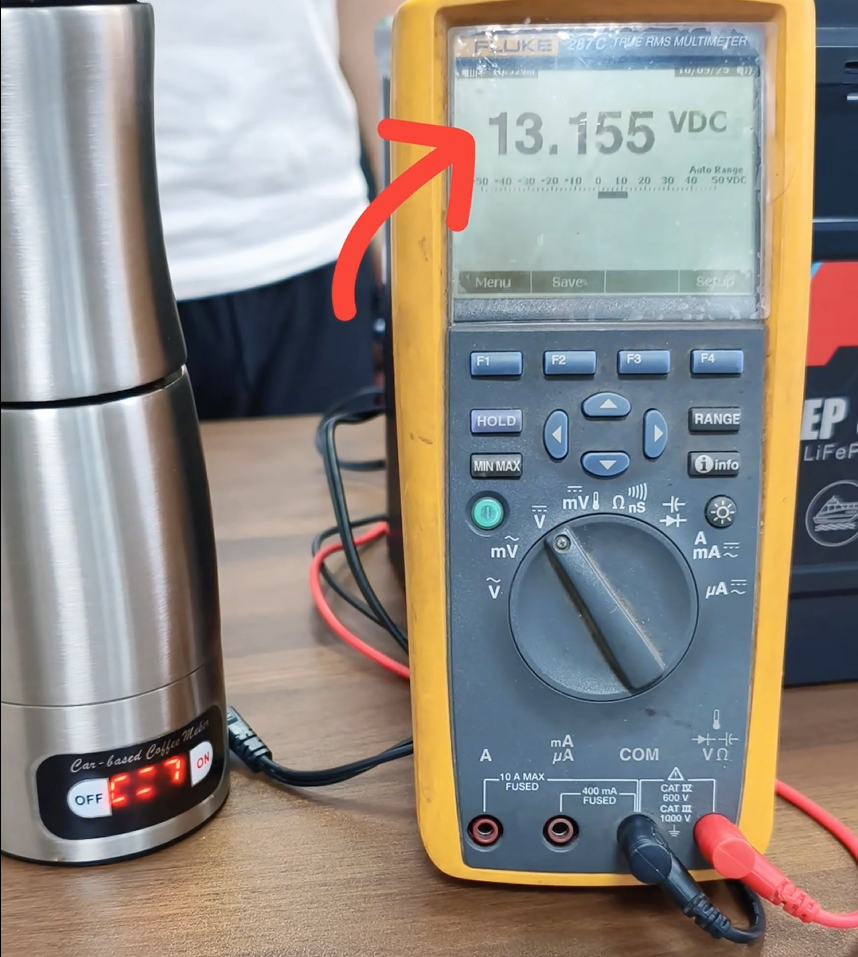
Second: On load Voltage
This is the voltage while the battery is discharging and running equipment. It is heavily affected by load size. The heavier the load, the lower the voltage will drop. 110 watts, so the voltage only changes a little.
Third: Charging terminal Voltage
This is the voltage measured during charging. Its value is higher than the real open-circuit voltage.
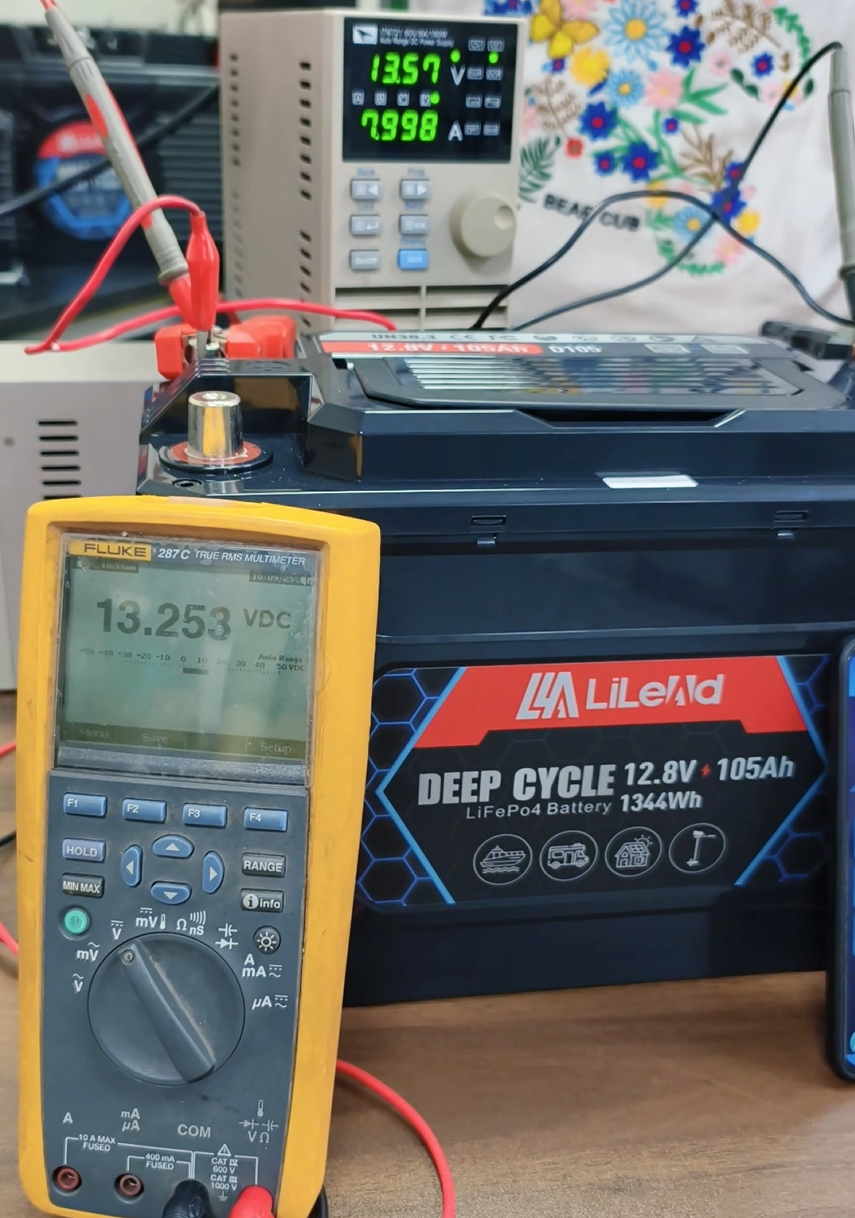
So here is the key question: can we rely purely on voltage to tell the remaining charge of a LiFePO₄ battery? Today we will break this down with real test data from LILEAD 12V 105Ah (D105) and 12V 125Ah (D125) batteries.
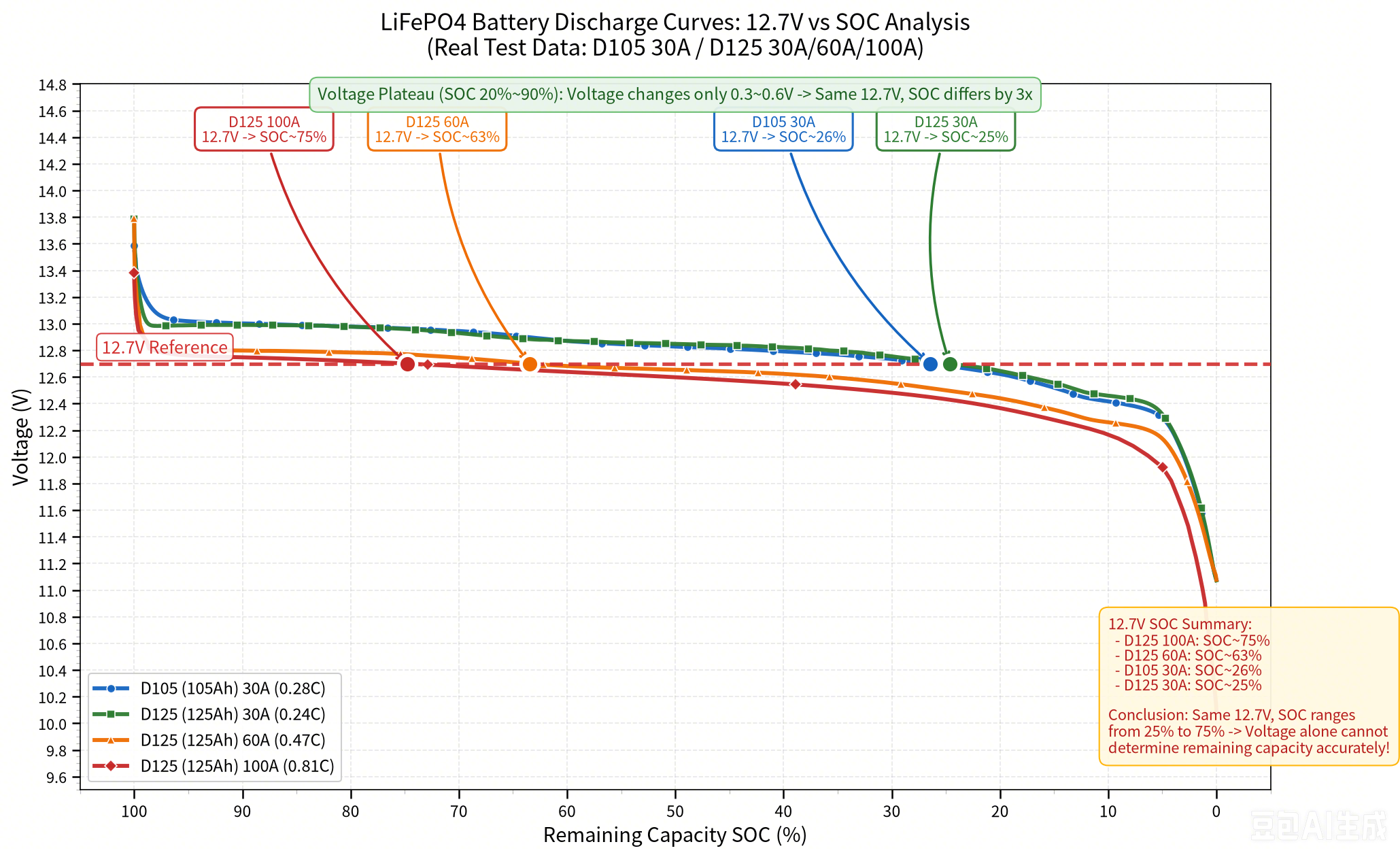
Let’s start with discharge scenarios, when the battery powers real world devices. From multi-rate discharge curves (30A, 60A, 100A) of D105 and D125, we can see something clear.
Within the main 20% to 90% SOC range of LiFePO₄ batteries, voltage only changes by 0.3 to 0.4 V. The curve stays almost flat.
Take 12.7 V as an example.
This same on load voltage could mean 25% remaining capacity, or it could mean 75%. What’s more, higher discharge current pulls the on load voltage further down.
At 50% SOC, the battery reads 12.85 V under 30A discharge. Switch to 100A heavy discharge, and the voltage falls to 12.6 V. You may easily mistake this for an empty battery. Only when SOC drops below 10% and the battery is nearly drained will the voltage fall sharply.
For most middle range charge levels, on load voltage cannot accurately show remaining capacity.
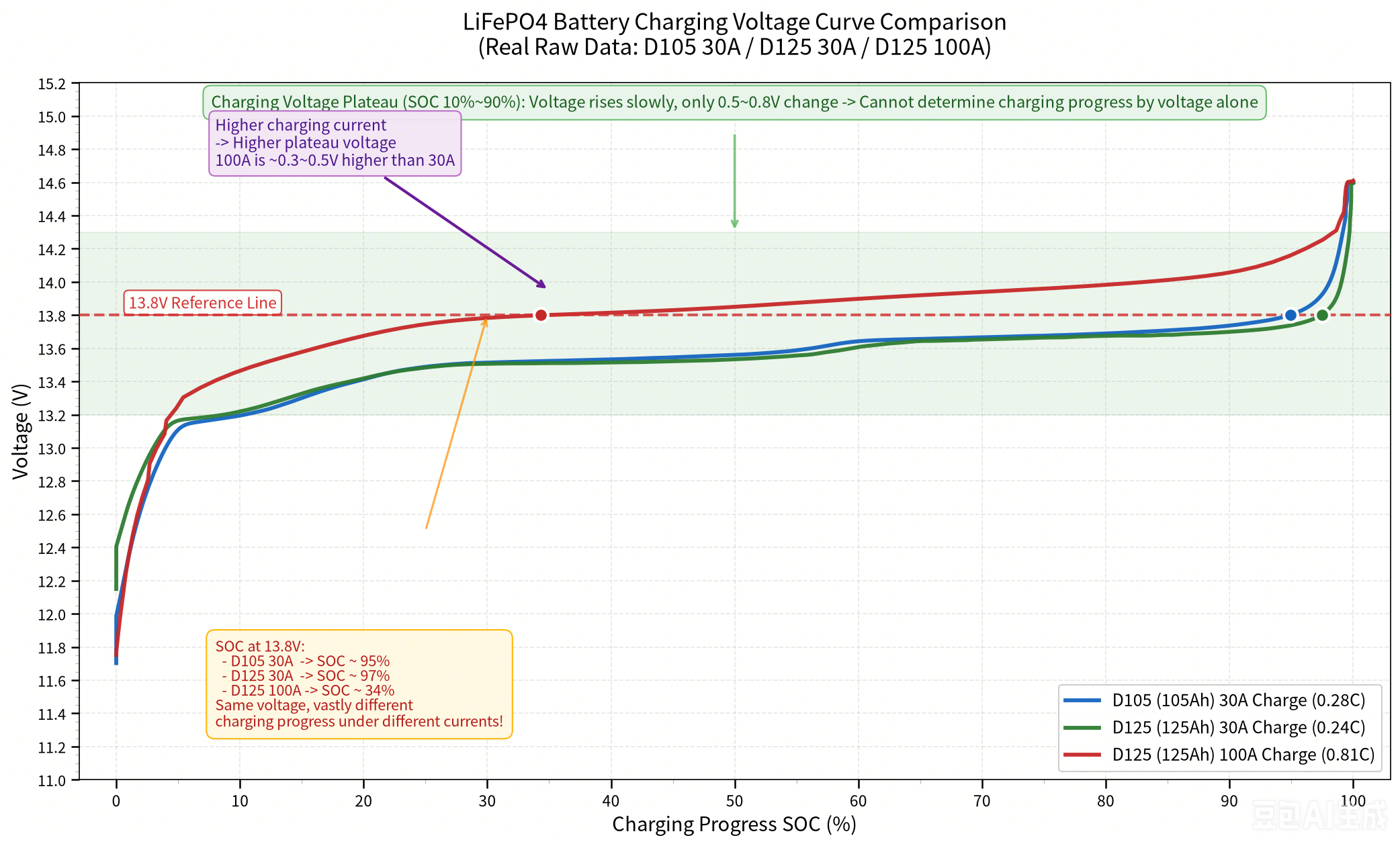
Now let’s look at charging voltage.
When charging a fully depleted battery from 0% to 100%, voltage rises very slowly between 20% and 90% SOC. At the same charging voltage of 13.8 V, the battery may only be 34% full, or it could already be 97% full.
In other words: voltage readings taken while charging cannot estimate how much energy has been put into the battery.
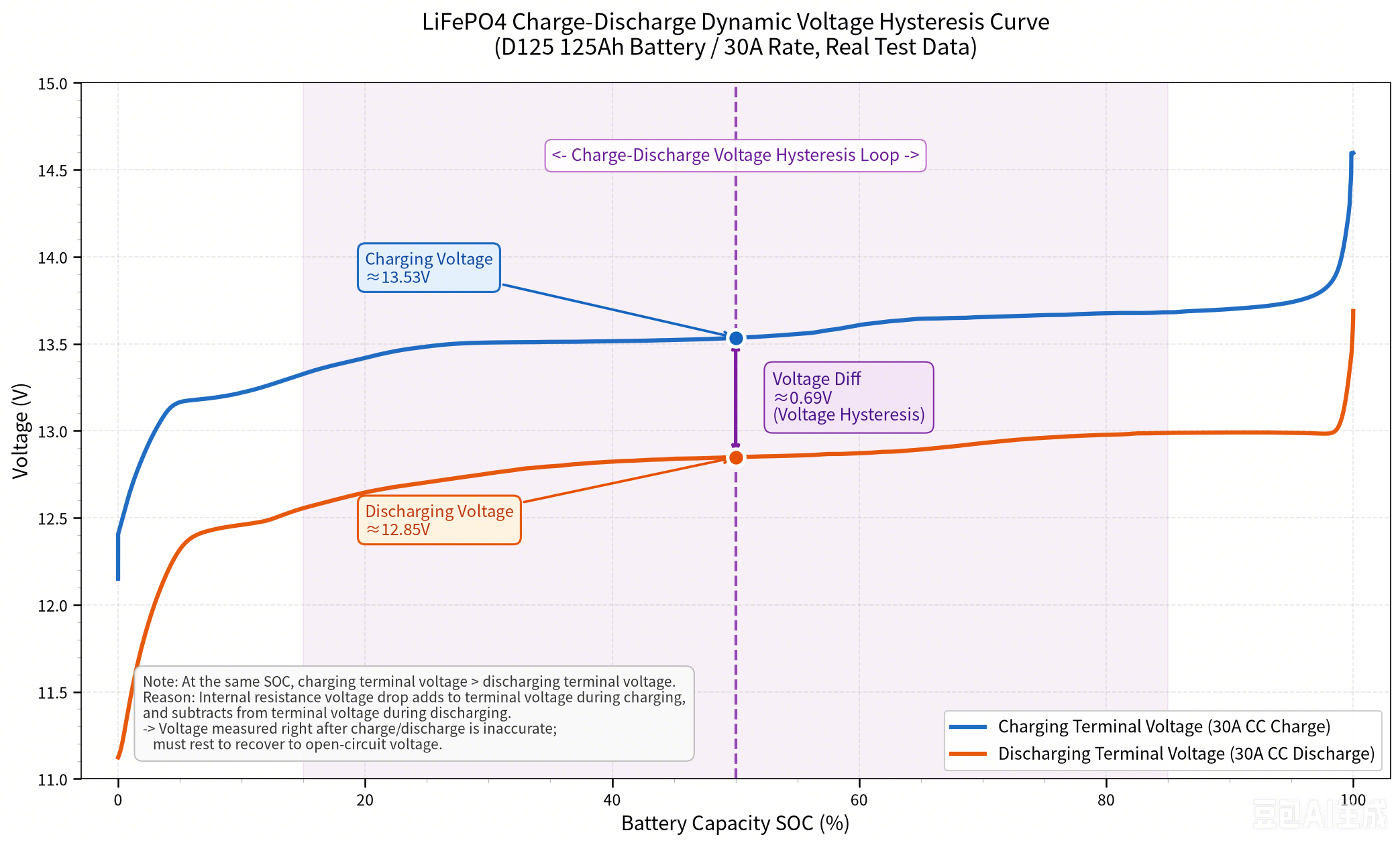
LiFePO₄ has a notable characteristic called voltage hysteresis.
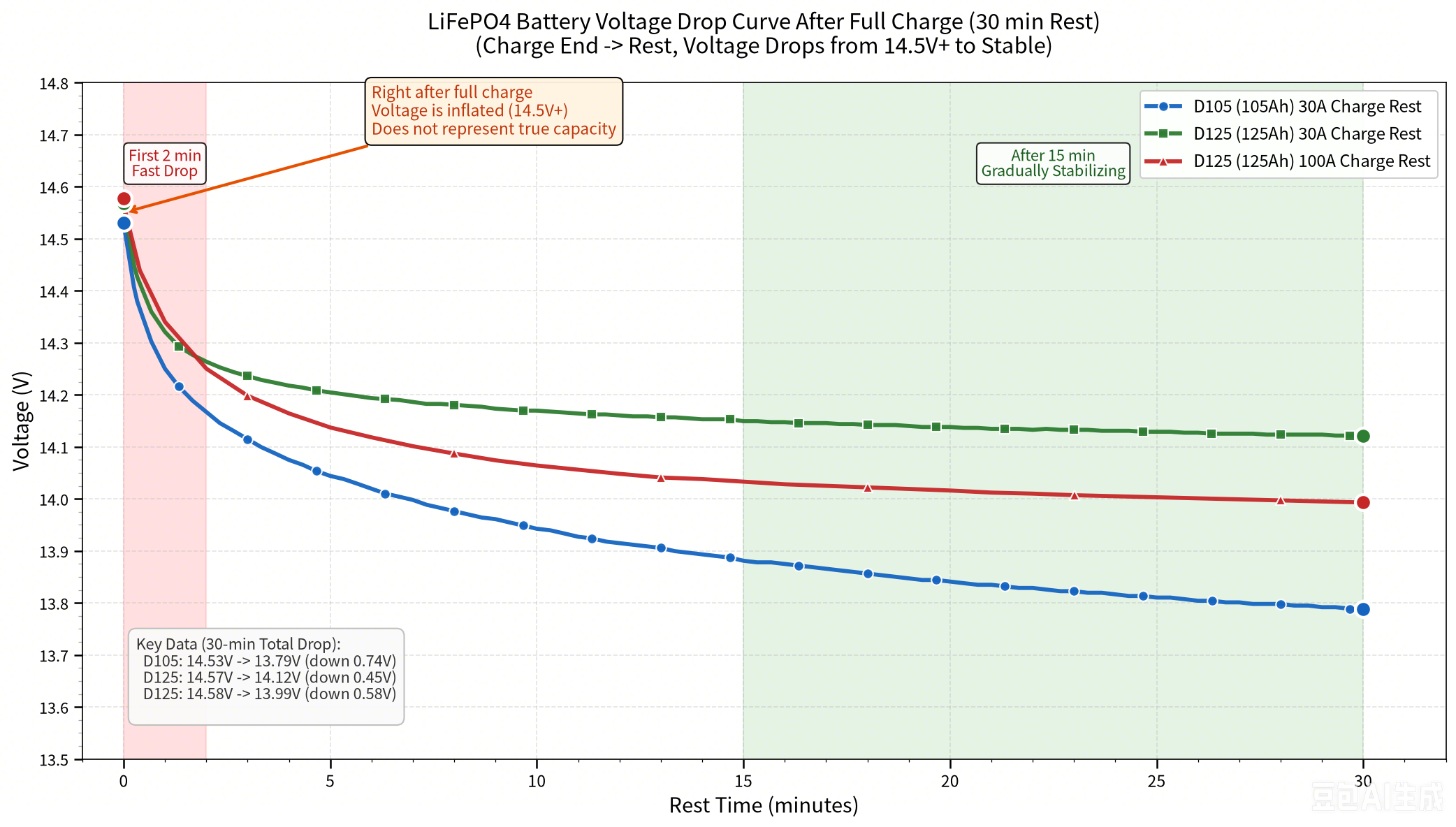
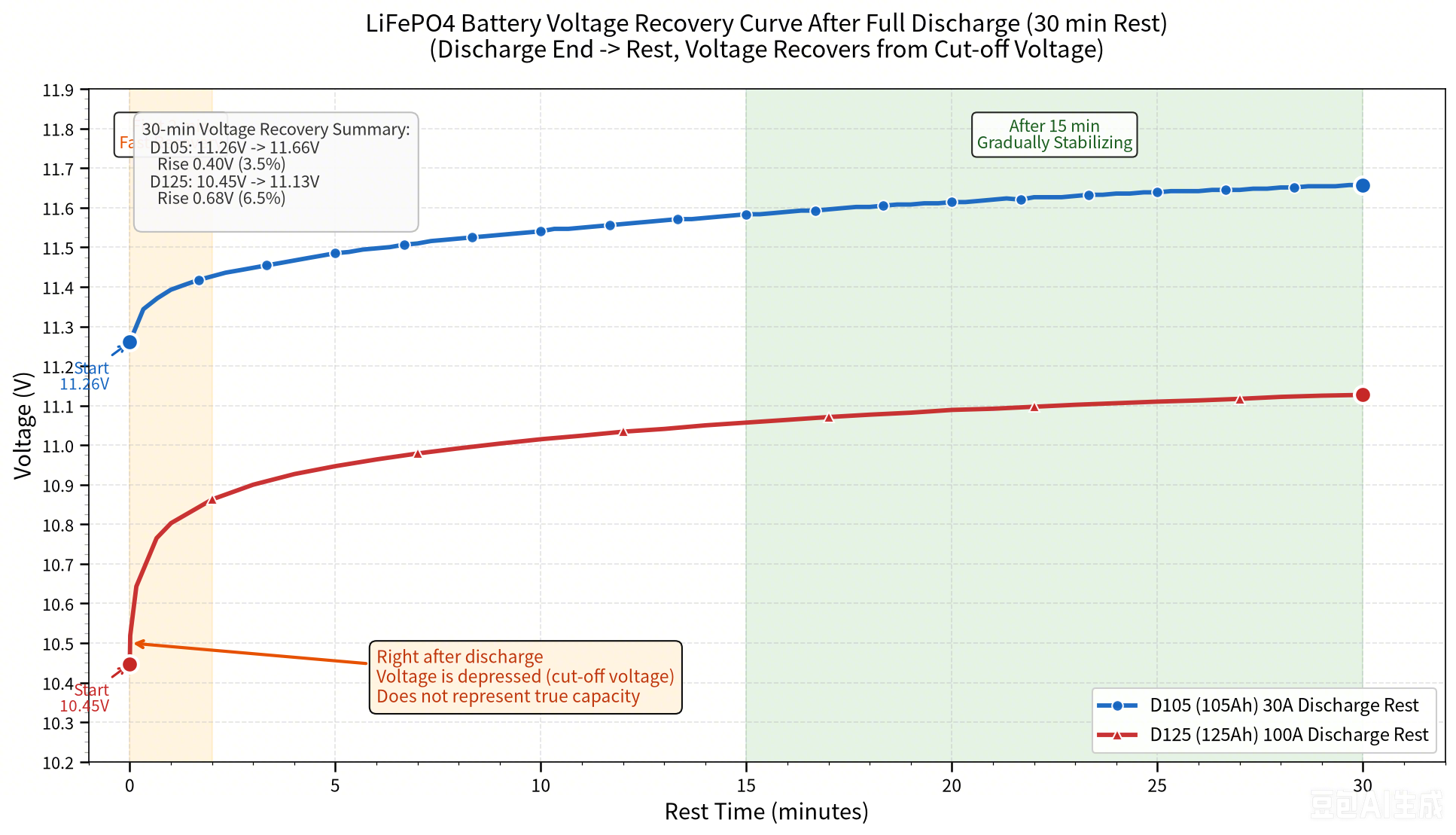
At exactly 50% SOC, the terminal voltage during charging can be over 0.7 V higher than the terminal voltage during discharging. This explains a common real world observation. Right after charging finishes, voltage reads artificially high. Right after discharging finishes, voltage reads artificially low. Readings taken at these two moments are not valid. The battery must rest long enough to reach its true open circuit voltage.
So, can open circuit voltage after resting tell us accurate battery capacity?
Here are test results:
we recorded voltage changes over 30 minutes, right after full charge and right after full discharge. Voltage can shift by as much as 0.7 V within half hour. It usually takes 2 to 3 hours of rest for voltage to stabilize completely. Even at open circuit state, within the flat voltage plateau from 20% to 90% SOC, voltage shifts remain tiny.
You still cannot get precise percentage level SOC readings. Open circuit voltage is only reasonably reliable near full charge or near full depletion.
So, final conclusion:
Even professional battery engineers cannot judge LiFePO₄ SOC by voltage alone. To get accurate SOC data, you need calculations from the battery BMS algorithm.
And, three practical tips for ordinary users: Do not match voltage readings taken during charge or discharge against online voltage SOC lookup tables. Voltage can only give you rough hints: whether the battery is nearly full or nearly empty.
If you want to know real remaining charge easily, pick batteries with built in SOC indicators. Options include status LEDs, Bluetooth APPs or built in device displays. There is no need to guess with a voltmeter.